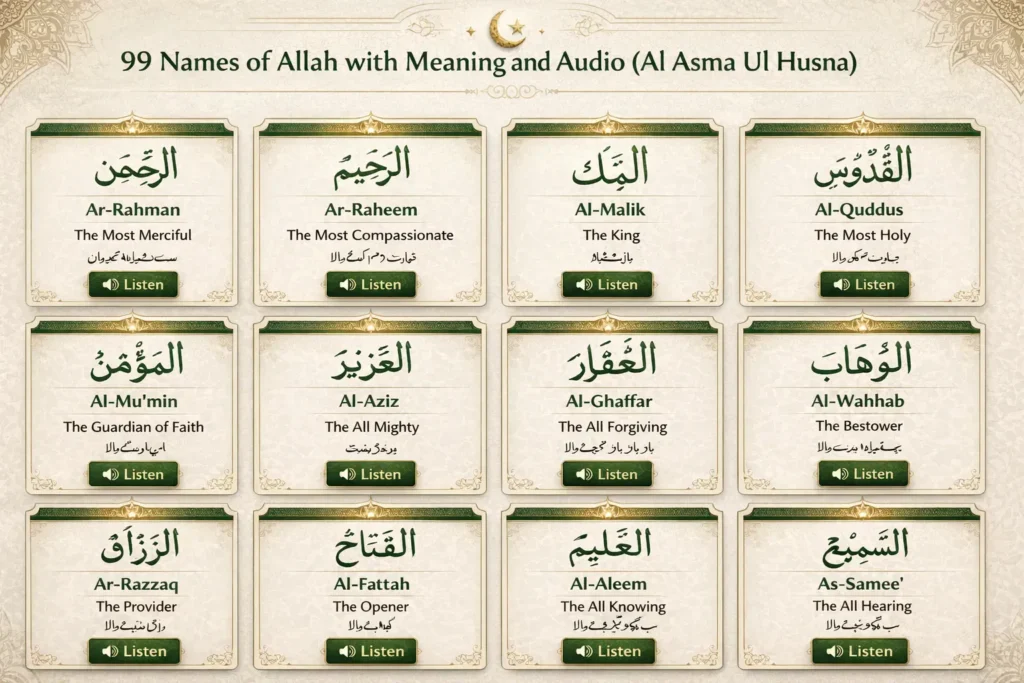
99 Names of Allah in English with Meaning, Arabic & Audio (Al Asma Ul Husna)
The 99 Names of Allah, known as Al-Asma Ul Husna, are the beautiful and perfect names that describe the qualities and attributes of Allah. These names show the mercy, power, wisdom, and greatness of Allah. Every name reflects a unique attribute that helps Muslims understand their Creator better.
Table of Contents
Table of Contents
Learning and remembering the 99 Names of Allah is highly recommended in Islam. Muslims often recite these names in their daily prayers and supplications to strengthen their faith and connection with Allah.
Allah has 99 beautiful names. The Prophet (PBUH) said: “Allah has ninety-nine names… whoever memorizes them will enter Paradise.” (Bukhari & Muslim)
99 Names of Allah with meaning in Urdu
You can Download 99 Names of Allah PDF
99 Names of Allah with meaning
Beautiful Names of Allah
99 Names of Allah mp3 Download
What Are the 99 Names of Allah?
The 99 Names of Allah are mentioned in the Quran and Hadith. These names describe the perfect attributes of Allah, such as mercy, knowledge, power, and justice.
According to a famous Hadith, Prophet Muhammad (ﷺ) said:
“Allah has ninety-nine names, one hundred minus one, and whoever memorizes them will enter Paradise.”
These names are not just words. They help believers understand the nature of Allah and encourage them to worship Him with love and respect.
Importance of Learning the 99 Names of Allah
Learning Al-Asma Ul Husna has many benefits for Muslims. These names remind believers about the greatness and mercy of Allah.
1. Strengthens Faith
When Muslims learn the names of Allah, they understand His qualities better. This strengthens their belief and trust in Allah.
2. Helps in Making Dua
Many Muslims use the names of Allah when making supplication. For example, asking Ar-Rahman for mercy or Ar-Razzaq for provision.
3. Brings Peace to the Heart
Reciting and remembering the names of Allah brings calmness and spiritual peace.
4. Encourages Good Character
Each name teaches a moral lesson. For example, Allah is Al-Adl (The Just), so Muslims are encouraged to be fair and honest.
Examples of Some Beautiful Names of Allah
Here are a few examples from the 99 Names of Allah:
Ar-Rahman (The Most Merciful)
This name shows that Allah’s mercy covers all creation. Every blessing we have is a sign of His mercy.
Ar-Raheem (The Most Compassionate)
Allah is extremely kind and compassionate to His servants, especially those who believe and follow His guidance.
Al-Malik (The King)
Allah is the true King and owner of the entire universe.
Al-Alim (The All-Knowing)
Allah knows everything, including what is hidden in our hearts.
Ar-Razzaq (The Provider)
All sustenance comes from Allah. He provides food, wealth, and blessings to all living creatures.
How Muslims Use the 99 Names in Daily Life
Muslims often recite the names of Allah in different ways:
- During Dhikr (remembrance of Allah)
- In daily prayers
- While making dua
- For spiritual reflection
Many Muslims also use Tasbeeh counters to repeat the names while remembering Allah.
Benefits of Reciting the 99 Names of Allah
Reciting Al-Asma Ul Husna regularly brings many spiritual benefits:
- Increases closeness to Allah
- Strengthens belief and patience
- Brings peace and blessings in life
- Helps Muslims remember Allah throughout the day
When believers reflect on these names, they develop a deeper understanding of Islam.
The Spiritual Meaning Behind the Names
Each name represents a perfect attribute of Allah. For example:
- Al-Ghaffar reminds us that Allah forgives sins.
- Al-Hakeem shows His infinite wisdom.
- As-Saboor teaches patience.
By reflecting on these meanings, Muslims can improve their character and actions.
Why the 99 Names Are Important for Muslims
The 99 Names of Allah are an important part of Islamic spirituality. They help believers develop a closer relationship with Allah.
Instead of seeing Allah as distant, these names remind Muslims that Allah is:
- Merciful
- Loving
- Powerful
- Just
- All-Knowing
Understanding these attributes helps Muslims trust Allah in every situation.
Benefits of Reciting Asma Ul Husna (99 Names of Allah)
Asma Ul Husna means the Beautiful Names of Allah. These 99 names describe the perfect attributes of Allah such as mercy, power, wisdom, and forgiveness. Reciting and remembering these names is a special act of worship in Islam. Muslims around the world read these names to strengthen their faith and bring peace to their hearts.
Below are some important benefits of reciting Asma Ul Husna.
1. Strengthens Faith (Iman)
Reciting the 99 Names of Allah helps Muslims understand the greatness of Allah. Each name describes a unique quality of Allah, such as mercy, justice, knowledge, and power. When believers learn these names, their faith becomes stronger and their trust in Allah increases.
2. Brings Peace and Calmness
Remembering Allah through His beautiful names brings peace to the heart and mind. Many Muslims recite Asma Ul Husna during times of stress or sadness. It helps them feel calm and reminds them that Allah is always there to help.
3. Helps in Making Powerful Dua
Using the names of Allah while making dua (supplication) is highly recommended in Islam. For example:
- Reciting Ar-Rahman when asking for mercy
- Reciting Ar-Razzaq when asking for sustenance
- Reciting Al-Ghaffar when asking for forgiveness
Calling upon Allah with His beautiful names makes the supplication more meaningful.
4. Increases Love for Allah
When Muslims learn the meanings of the 99 Names of Allah, they realize how merciful, kind, and powerful Allah is. This understanding increases their love and respect for their Creator.
5. Brings Spiritual Rewards
Reciting and memorizing the names of Allah brings great rewards. According to a famous Hadith, the Prophet Muhammad ﷺ said that whoever memorizes the 99 names of Allah will enter Paradise. This shows how important these names are in Islam.
6. Encourages Good Character
Each name of Allah teaches an important lesson. For example:
- Al-Adl (The Just) reminds Muslims to be fair.
- As-Saboor (The Most Patient) teaches patience.
- Ar-Raheem (The Most Compassionate) encourages kindness to others.
By reflecting on these names, Muslims try to improve their behavior.
7. Keeps the Heart Connected to Allah
Reciting Asma Ul Husna regularly helps Muslims remember Allah throughout the day. This remembrance is called Dhikr, and it strengthens the spiritual connection between a believer and Allah.
Conclusion
Reciting Asma Ul Husna (the 99 Names of Allah) is a beautiful way to remember Allah and understand His perfect attributes. It strengthens faith, brings peace to the heart, and helps Muslims make sincere prayers. By learning and reflecting on these names, believers grow spiritually and develop a deeper relationship with Allah.
Muslims are encouraged to recite, memorize, and reflect on the 99 Names of Allah regularly to gain both spiritual benefits and rewards in this life and the hereafter.
Edit this page from Dashboard → Pages → 99 Names of Allah to add the complete list.